




DJing is not only about choosing songs that sound good individually. A great set depends on how smoothly one track moves into the next. Tempo, energy, genre, phrasing, and vocals all matter, but harmonic mixing can make transitions sound much more natural. One of the easiest systems for understanding musical keys is Camelot notation.
Camelot notation converts traditional musical keys into a simple combination of letters and numbers. Instead of needing advanced music theory knowledge, DJs can use the system to identify compatible tracks and plan smoother transitions. Tools such as TuneBat can also help DJs explore song information, including tempo and key, before deciding how tracks should fit together.
Whether you are learning to DJ at home or preparing a professional club set, understanding Camelot notation can make song selection faster and more predictable. The key is knowing what the numbers and letters mean and how to move between them.
What Is Camelot Notation?
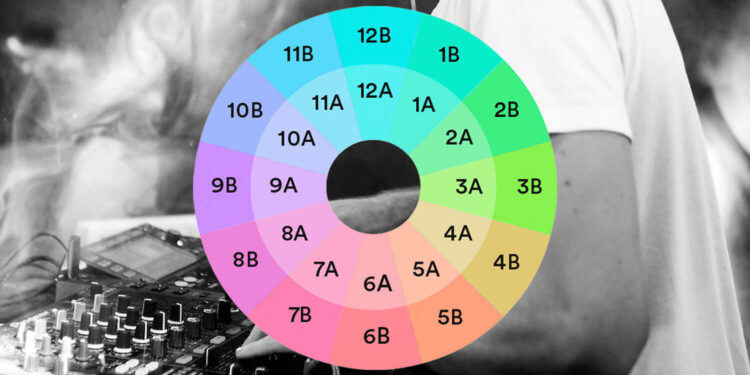
Camelot notation is a system designed to simplify harmonic mixing. It represents musical keys using numbers from 1 to 12 combined with either the letter A or B.

The numbers correspond to positions around the Camelot Wheel, while the letters identify whether the key is minor or major.
For example:



- 8A represents A minor.
- 8B represents C major.
- 9A represents E minor.
- 9B represents G major.
The system is based on relationships between musical keys. Keys positioned close together on the Camelot Wheel generally have stronger harmonic relationships, making them useful starting points when planning transitions.
This does not mean that every DJ must stay within one Camelot number throughout an entire performance. Instead, the notation provides a practical framework for finding tracks that are more likely to blend musically.
Why Do DJs Use Camelot Notation?
When two songs are in compatible keys, mixing their melodies and harmonic elements can sound smoother. In contrast, combining incompatible keys can sometimes create clashing notes, particularly when both tracks contain prominent melodies, vocals, basslines, or sustained sounds.
Camelot notation gives DJs a quick visual method for avoiding many of these clashes.



For example, if your current track is 8A, you have several common options for your next song:
- 8A — Stay in the same key.
- 8B — Move to the relative major.
- 7A — Move one position counterclockwise.
- 9A — Move one position clockwise.
These movements are popular because they maintain a close harmonic relationship.
However, harmonic compatibility should not replace musical judgment. A technically compatible song may still be a poor choice if its energy, rhythm, genre, or arrangement does not fit the moment.
How the Camelot Wheel Works
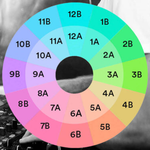
The easiest way to understand Camelot notation is to imagine a clock.
The numbers 1 through 12 form a circular sequence. Each position represents a key relationship, and the A and B designations separate minor and major keys.
For example, if you are playing a track labeled 10A, moving to 9A or 11A keeps you within neighboring positions on the wheel. Moving from 10A to 10B changes between the related minor and major keys.
This creates a simple approach for DJs:
Same number, same letter:
The tracks share the same Camelot key designation.
Same number, different letter:
The tracks use closely related major and minor keys.
One number higher or lower, same letter:
The tracks are neighboring positions on the wheel.
The idea is to use these relationships as a guide rather than a strict rulebook.
How to Use Camelot Notation During a DJ Set
Before using Camelot notation in a live performance, analyze the tracks you are considering. Find the musical key of each song and convert it into Camelot notation if your DJ software does not already display it.
Once your tracks are labeled, you can organize them into groups.
Suppose your current song is 6A. Instead of searching through your entire music library for the next track, you can initially look for songs labeled 6A, 6B, 5A, or 7A.
This reduces the number of possibilities and can make track selection much faster.
You can then consider other factors such as BPM, genre, energy, vocals, and song structure.
For example, a 6A track at 124 BPM may technically mix well with another 6A track at 128 BPM, but the tempo difference and energy level might require a different transition technique. Camelot notation helps with the harmonic relationship, but it does not solve every part of the mix.
Use BPM and Key Together
One common mistake is to treat harmonic mixing as the only factor that matters.
A DJ should consider both key and tempo when selecting the next track. BPM determines how quickly the music moves, while key helps determine how the musical elements interact.
Imagine you are playing a 124 BPM house track in 8A. You find another 8A track at 125 BPM. This could be a convenient option because the keys are identical and the tempos are close.
You might also find a 7A track at 124 BPM. That track could offer another harmonic option while maintaining the same tempo.
By combining BPM and Camelot notation, you can narrow down your choices without making your set feel predictable.
When You Should Break the Camelot Rules
Camelot notation is a useful guide, but experienced DJs do not necessarily follow it for every transition.
Sometimes an intentionally dissonant transition can create tension before a drop. A sudden key change can also work when the arrangement gives you enough space to make the transition sound deliberate.
Genre is another important consideration. Some styles of electronic music rely heavily on melodic elements, while other genres may have fewer sustained harmonic components. In a percussion-heavy section, the key relationship may be less noticeable than it would be during a vocal or melodic breakdown.
You should therefore treat Camelot notation as a tool rather than a restriction.
The Camelot Wheel explained by Mixed In Key provides another useful reference for understanding how the system represents harmonic relationships.
Practical Example of Camelot Mixing
Imagine your playlist contains these four tracks:
- Track A — 7A
- Track B — 8A
- Track C — 8B
- Track D — 9B
If you start with Track A, moving to Track B creates a neighboring-key transition.
From Track B, moving to Track C changes from the minor side to the related major side.
From Track C, moving to Track D continues around the major side of the wheel.
This gives you a basic harmonic path:
7A → 8A → 8B → 9B
You can build much longer sequences using the same principle. The important part is to listen to the actual songs rather than relying entirely on their labels.
Camelot Notation and DJ Software
Modern DJ software can make harmonic mixing much easier because many platforms can analyze a track’s musical key automatically.
After analysis, the software may display a traditional key such as A minor, or it may provide Camelot-style notation depending on the software and settings.
Before performing, it is worth checking your library because automatic key detection is not perfect. Songs with complex arrangements, live instruments, key changes, or ambiguous tonal centers can sometimes be analyzed incorrectly.
If a transition sounds wrong despite the Camelot labels suggesting compatibility, trust your ears and investigate the tracks again.
Tips for Better Harmonic Mixing
Start with a few simple habits rather than trying to memorize the entire wheel immediately.
First, learn the four basic movements: staying on the same number and letter, changing between A and B at the same number, and moving one number up or down while keeping the same letter.
Second, practice with tracks you know well. Familiar songs make it easier to recognize when a harmonic transition works.
Third, combine key matching with BPM and energy. A technically compatible track can still feel wrong if it dramatically changes the mood of the set.
Finally, practice transitions in different parts of songs. A harmonic clash may be obvious when two melodies play together but almost invisible when you transition during a drum-focused section.
Conclusion
Camelot notation gives DJs a straightforward way to understand musical key relationships without requiring extensive music theory knowledge. By learning how the numbers and letters work, DJs can quickly identify potential tracks and create smoother harmonic transitions.
The best results come from combining Camelot notation with BPM, phrasing, arrangement, genre, and energy. Use the wheel to narrow your options, then use your ears to make the final decision.
With regular practice, Camelot notation can become a natural part of your DJ workflow. Instead of manually guessing which tracks might work together, you can use key relationships as a starting point and spend more time focusing on building an engaging, musical set.