



Creating a comic story from scratch can seem difficult at first, especially when you have an idea but do not know how to turn it into characters, scenes, dialogue, and panels. The good news is that you do not need to begin with a complete script or a perfect drawing. A strong comic starts with a simple idea and develops step by step.
Comics combine written words with visual art to tell a story. Each panel needs to move the reader through the narrative while the characters, expressions, settings, and dialogue work together. If you want to turn your ideas into a visual story, tools such as Pixton can also make the creative process easier by helping you focus on storytelling while building your comic.
1. Start With a Simple Story Idea
Every comic begins with an idea. It could be a funny situation, an adventure, a mystery, a school experience, a fantasy world, or even a short lesson.
Do not try to create an enormous story immediately. Start by answering three basic questions:
- Who is the main character?
- What does the character want?
- What problem stands in the way?
For example, imagine a student named Alex who wants to win a school science competition. The problem is that Alex has only one day left to finish the project.
That simple idea already gives you a character, a goal, and a conflict. From there, you can build the rest of the story.


2. Decide What Your Comic Is About
Before creating panels, identify the main purpose of your story. Ask yourself what you want readers to experience.
A comic can be created to make people laugh, tell an exciting adventure, explain an idea, share a personal experience, or communicate a lesson.
Knowing the purpose helps you make better decisions later. If the comic is supposed to be funny, for example, you can build situations around misunderstandings and surprising reactions. If it is an adventure, you may need stronger obstacles and a more active plot.
Keeping one central idea also prevents the story from becoming confusing.



3. Create Your Main Character
A memorable comic needs characters that readers can understand quickly. You do not need a long biography for every character. Instead, define a few important traits.
Think about:
- Personality
- Appearance
- Goal
- Strengths
- Weaknesses
- Fears
- Relationships with other characters
A character becomes more interesting when they have something to overcome.
For example, a character who wants to become a great musician but is afraid of performing in front of people has an immediate internal conflict. The story can follow their attempts to overcome that fear.
Character design should also support the story. A character’s clothing, facial expressions, posture, and visual features can communicate information without requiring long explanations.
4. Build a Beginning, Middle, and End
A simple three-part structure is useful when learning how to create a comic story.
Beginning
Introduce the characters, setting, and main situation. Give readers enough information to understand what is happening.
Middle
Introduce problems, challenges, discoveries, or conflicts. The main character should have to make decisions rather than simply move from one scene to another.
End
Resolve the main problem or provide a meaningful ending. The character might succeed, fail, learn something, or discover that their original goal has changed.
This structure does not have to be complicated. Even a short four- or six-panel comic can have a clear beginning, middle, and ending.
5. Turn the Story Into Scenes
Once you know the basic plot, divide it into individual scenes.
A scene should have a reason to exist. It might introduce a character, reveal information, create a problem, increase tension, or move the story toward its ending.
For example, a short comic about a lost dog could have these scenes:
- A child notices that the dog is missing.
- The child searches the neighborhood.
- The child discovers a clue.
- The search leads to a local park.
- The dog is found.
- The story ends with the reunion.
Breaking the story into scenes makes the next step—creating panels—much easier.
6. Plan Your Comic Panels
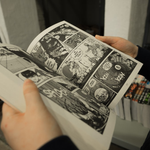
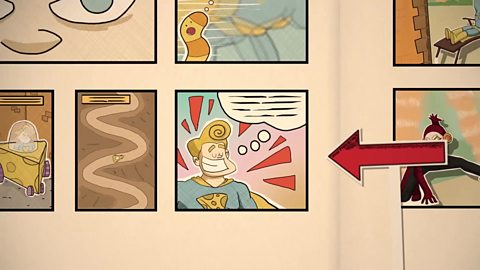
Panels are the building blocks of a comic. Each panel shows a moment in the story, and the sequence of panels creates movement and meaning.
The Library of Congress describes comics and graphic novels as forms that combine written words and visual art, with sequences of panels helping advance a narrative.
Before creating the final artwork, make a rough panel plan. Decide what readers need to see in each moment.
For every panel, ask:
- What is happening?
- Who is visible?
- Where are they?
- What emotion should the reader notice?
- Is dialogue necessary?
- Does this panel move the story forward?
Avoid filling every panel with unnecessary information. Sometimes a simple image can communicate more than several lines of dialogue.
7. Write Natural Dialogue
Dialogue should sound like something a real character would say. Avoid using speech bubbles simply because there is empty space in a panel.
Good dialogue can reveal personality, provide information, create humor, or increase tension.
For example, instead of writing:
“I am extremely worried because the science competition begins tomorrow and I have not completed my project.”
You could make the conversation more natural:
“The competition is tomorrow—and my project isn’t finished!”
The second version is shorter and more suitable for a comic panel.
Remember that the artwork should also communicate information. Characters do not always need to explain what readers can already see.
8. Use Facial Expressions and Body Language
One of the biggest strengths of comics is visual communication. A character can communicate happiness, fear, confusion, anger, or surprise through their face and body.
Consider how the same character might look in different situations:
- Wide eyes can suggest surprise.
- A lowered head can suggest sadness.
- Crossed arms can suggest frustration.
- A smile can communicate excitement.
- A tense posture can suggest fear.
These details make characters feel more alive and reduce the need for excessive dialogue.
9. Think About Setting and Backgrounds
The setting tells readers where and when the story takes place.
You do not need an elaborate background in every panel, but important locations should be clear. A classroom, city street, forest, bedroom, space station, or fantasy castle can immediately establish the environment.
You can also use backgrounds strategically. A wide establishing panel can show the location, while later close-up panels can focus mainly on the characters.
This creates visual variety and helps readers understand the relationship between characters and their surroundings.
10. Control the Pace of the Story
Pacing determines how quickly readers move through your comic.
Several small panels can slow down an important moment. A larger panel can give a dramatic event more visual importance. Quick dialogue exchanges can create energy, while larger pauses can create suspense.
Think about the emotional rhythm of your story. If every panel has the same size, amount of dialogue, and visual intensity, the comic may feel flat.
Varying panel composition can make important moments stand out.
11. Review the Comic Before Finishing
When your first version is complete, read through the comic from beginning to end.
Do not only check spelling and grammar. Look at the story as a reader would.
Ask yourself:
- Is the main problem clear?
- Can I understand what happens without extra explanation?
- Does every panel have a purpose?
- Are the characters easy to recognize?
- Is the dialogue too long?
- Does the ending feel complete?
- Are there any confusing transitions?
If possible, show the comic to another person. A fresh reader may notice confusing sections that you no longer see because you already know the story.
12. Keep Improving Through Practice
Your first comic does not need to be perfect. Comic storytelling is a skill that improves through experimentation.
Try different genres, panel layouts, characters, and storytelling styles. Make short comics before attempting a long graphic novel. A five-panel story can teach you a great deal about pacing, dialogue, character development, and visual storytelling.
The Library of Congress’s comic-art resources also show how visual storytelling has developed across different periods and styles, demonstrating that there is no single way to create a comic.
Conclusion
Creating a comic story from scratch becomes much easier when you separate the process into manageable steps. Start with a simple idea, develop a character with a clear goal, create a problem, and build a beginning, middle, and ending. Then divide the story into scenes and panels.
From there, focus on dialogue, expressions, backgrounds, pacing, and visual details. Most importantly, keep practicing. You do not need a huge story or advanced artistic skills to begin. A simple idea developed clearly can become an engaging comic that readers enjoy.